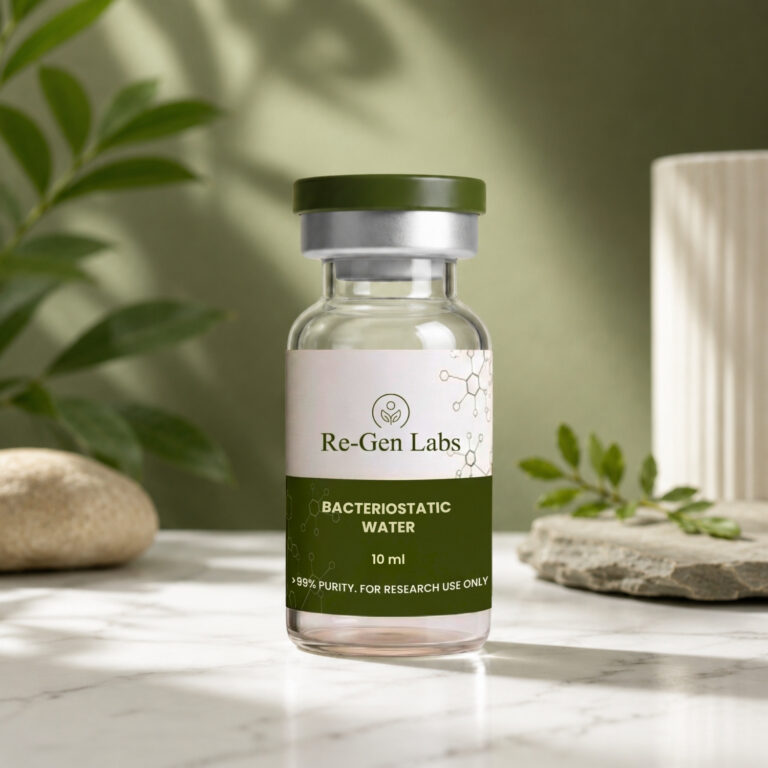
Transforming a dormant, freeze-dried research compound into a highly precise, ready-to-administer aqueous solution represents the most critical bottleneck in the entire sequence of laboratory preparation. For independent scientific investigators, academic researchers, and technical staff operating within the distinct environment of the United Arab Emirates, commanding this preparation phase requires an operational scope that extends far beyond fundamental arithmetic.
Executing a flawless calculation is entirely futile if the raw material has already been structurally compromised. In the Gulf region, researchers face an intense intersection of exact dosing mathematics, unforgiving environmental variables, and rigorous sterile handling requirements. If a delicate peptide chain succumbs to the extreme summer heat of the GCC before it even crosses the threshold of your laboratory, every subsequent mathematical formula you apply to that vial is inherently flawed from the very first step.
This comprehensive, long-form resource is engineered to completely rebuild your laboratory’s standard operating procedures. By breaking down the intricate physics of aseptic mixing, standardizing your calculation frameworks, and mapping out robust strategies for localized procurement, this guide ensures absolute structural integrity from the moment a compound is synthesized to the exact second it is extracted into a syringe.
Understanding the Chemical State: Lyophilization
To truly master dosage mathematics, a technician must first understand the physical state of the material they are handling. High-grade research compounds are subjected to a sophisticated manufacturing process known as lyophilization, commonly referred to as freeze-drying.
In this state, the compound is rapidly frozen, and then the surrounding pressure is significantly reduced. This allows the frozen water in the material to sublimate directly from a solid ice phase into a gas, bypassing the liquid phase entirely. The result is a highly stable, tightly compacted powder “puck” resting at the bottom of the glass vial.
This freeze-dried state is crucial because it halts the natural degradation processes that occur in aqueous environments. However, it also creates a unique challenge for the end-user: the material is incredibly concentrated and highly fragile. When you look at a lyophilized vial, you are observing a dense cluster of precisely folded amino acid chains. Understanding this molecular fragility is the foundational prerequisite before any diluent is ever introduced.
The Core Metric: Milligrams Versus Micrograms
The root cause of almost all dosing confusion within research facilities stems from a fundamental disconnect between procurement metrics and application metrics. Across the global supply chain, lyophilized products are universally categorized and sold based on their total aggregate weight, which is measured in milligrams (mg). Conversely, advanced laboratory protocols and in-vitro methodologies almost exclusively require microscopic volumetric measurements calculated in micrograms (mcg).
Before a technician ever touches a vial of sterile water, they must fully internalize the absolute baseline conversion rule: one single milligram equates to exactly one thousand micrograms.
Therefore, if your facility purchases a standard vial prominently labelled as 5mg, that container holds an aggregate total of 5,000mcg of the target chemical. A container labelled as 10mg holds precisely 10,000mcg.
The most critical principle of reconstitution chemistry is understanding the difference between mass and density. Adding a sterile diluent—such as bacteriostatic water (BAC)—alters the density of your resulting solution, but it never, under any circumstances, changes the total mass of the active compound within the glass.
If you introduce 1mL of bacteriostatic water into a 5,000mcg vial, you create an incredibly dense, highly concentrated mixture. If you decide to inject 2mL of bacteriostatic water into that exact same 5,000mcg vial, you are simply spreading that identical amount of active compound across double the fluid volume. Experienced researchers often intentionally select a lower concentration because diluting the mixture further allows for much more forgiving fluid extraction, drastically minimizing the margin of human error when drawing microscopic volumes into the barrel of a syringe.
Anatomy and Calibration of the U-100 Syringe
Within rigorous scientific and medical environments worldwide, the U-100 syringe stands as the universal, non-negotiable instrument for measuring and extracting aqueous preparations.
The numerical designation “100” is not arbitrary; it dictates the precise volumetric calibration of the instrument. It signifies that the barrel of the syringe is divided into one hundred individual, equidistant tick marks, which collectively equal exactly 1 millilitre (1 mL) of total fluid capacity.
By extension, every single individual increment line marked on that barrel represents exactly 0.01 mL of fluid volume. Understanding this physical calibration is what allows researchers to translate a calculated microgram dose into a physical, visible liquid draw.
The Three-Phase Mathematical Framework
To guarantee flawless dosing and eliminate the catastrophic risks associated with manual calculation errors, technicians must execute a rigid, unyielding three-phase arithmetic framework.
Phase One: Isolate the Aggregate Mass
The first step requires converting the container’s printed milligram label into a total microgram value. You achieve this by multiplying the listed mg value by 1,000.
- Scenario A: A 5mg vial × 1,000 = 5,000mcg total mass.
- Scenario B: A 10mg vial × 1,000 = 10,000mcg total mass.
Phase Two: Establish the Fluid Density
Next, you must calculate the exact strength (or concentration) of your new solution. You find this by dividing the total microgram number by the precise amount of bacteriostatic water (measured in millilitres) that you injected into the container.
- Scenario A: You add 2mL of diluent to the 5,000mcg vial. (5,000 ÷ 2 = 2,500mcg). Your density is 2,500mcg per every 1mL of fluid.
- Scenario B: You add 3mL of diluent to the 10,000mcg vial. (10,000 ÷ 3 = 3,333.3mcg). Your density is 3,333.3mcg per every 1mL of fluid.
Phase Three: Pinpoint the Barrel Target
Finally, to identify the exact tick mark you need to draw to on the U-100 barrel, divide your specific protocol’s target microgram dose by the fluid density you calculated in Phase Two, and then multiply that resulting fraction by 100.
- Execution: Your study requires a precise 250mcg application from the mixture in Scenario A.
- The Math: Divide 250 (target dose) by 2,500 (fluid density) to get 0.1.
- The Result: Multiply 0.1 by 100. You must pull the plunger exactly to the 10-unit line on the syringe barrel.
The Physics of Aseptic Reconstitution
Even the most flawless mathematical models cannot save an experiment if the chemical compound is physically shattered or biologically contaminated during the mixing process. Because lyophilized structures are built from highly intricate, delicate amino acid chains, they are exceptionally vulnerable to physical turbulence, sudden pH shifts, and atmospheric bacteria.
Impeccable aseptic technique is not optional; it is mandatory. The preparation sequence must commence by aggressively sanitizing both the sterile diluent dispenser and the target vial’s rubber septum using high-grade 70% isopropyl alcohol.
The physical act of introducing the water is where most novice errors occur. Upon piercing the rubber stopper of the target vial, the technician must angle the steel needle sharply at 45 degrees, directing the bevel so it faces the interior glass wall.
Premium research vials are almost universally sealed under a heavy vacuum environment during the lyophilization process to preserve longevity. This means that the moment the needle breaches the rubber barrier, the negative pressure inside the vial will aggressively attempt to suck the bacteriostatic water inward.
The technician must actively and firmly pull back against the syringe plunger to ensure the water trickles gently and methodically down the glass. Allowing the water to blast directly onto the fragile powder puck like a high-pressure hose will cause immediate mechanical damage to the peptides.
Furthermore, under no circumstances should the vial ever be forcefully shaken. Vigorous agitation generates extreme mechanical shear forces that quite literally snap molecular bonds, rendering the highly expensive material totally useless for accurate data collection. The only scientifically acceptable method for dissolving the powder is holding the vial gently and rolling it in a slow, continuous swirling motion until the solution becomes entirely translucent and devoid of any floating particulate matter.
Mitigating Extreme Climate Risks in the GCC
Operating a rigorous scientific facility within the Gulf region introduces massive logistical and environmental complexities that foreign laboratories simply never have to consider. Ambient summer temperatures across Dubai, Abu Dhabi, and the broader Emirates routinely spike well past 40°C.
The interior cargo holds of standard international delivery vans can become significantly hotter than the ambient air. Exposing these highly fragile biological compounds to this level of intense, radiating heat—even for a period of just a few hours—triggers rapid thermal degradation. The heat tears apart the structural bonds of the amino acids, mutating the chemical into an entirely different, degraded substance before you ever even slice open the cardboard shipping box.
Your mathematical precision heavily relies on the absolute assumption that the raw material is 99% pure. If the compound has suffered thermal damage in transit, your baseline math is fundamentally broken, and your subsequent research data will be invalid.
To neutralize this localized threat, Re-Gen Labs utilizes specialized, temperature-controlled courier networks across the UAE. By maintaining a strict, climate-controlled +2°C to +8°C environment from the moment the compound leaves our specialized inventory storage until it is physically handed to your laboratory personnel, we completely eliminate the variable of thermal degradation.
Once you introduce bacteriostatic water to the lyophilized powder, the resulting aqueous liquid becomes vastly more unstable than its dry counterpart. These active fluid solutions must be continuously stored in a laboratory refrigerator regulated strictly between 2°C and 8°C. Furthermore, laboratory best practices and sterility guidelines dictate that any remaining liquid should be permanently discarded after a 28-day window to prevent bacterial proliferation and ensure maximum structural stability.
Verifying Baseline Integrity and Batch Traceability
A concentration calculation is only as accurate as the raw material provided by the manufacturer. Substandard, grey-market manufacturers frequently attempt to bulk up their powder pucks using harmless stabilizing fillers, such as mannitol. While mannitol helps the powder retain its shape during freeze-drying, an overabundance of it completely obscures the actual net weight of the active ingredient.
If a vial claims to contain 5mg, but is actually comprised of 3.5mg of active peptide and 1.5mg of mannitol filler, your entire math formula is instantly compromised. To guarantee the integrity of your dosing formulas, procurement teams must insist on viewing independent, third-party Certificates of Analysis (COAs) and High-Performance Liquid Chromatography (HPLC) testing reports to verify both the true net weight and the >99% chemical purity of the active ingredient.
Navigating Regional Compliance and Commercial Friction
Sourcing research materials within the United Arab Emirates requires safely navigating a highly strict commercial and regulatory landscape. Following extensive enforcement crackdowns by the Emirates Drug Establishment (EDE) on unapproved clinical materials and consumer weight-loss products, the lines between medical supply and research supply are heavily monitored.
Authorized independent suppliers must operate with absolute transparency, utilizing clear Department of Economy and Tourism (DET) trade licenses that explicitly designate their specialized inventory as “strictly for in-vitro research and not for human consumption”.
Financial infrastructure presents another massive hurdle for laboratory procurement. Mainstream global payment processors, including Stripe, Wise, and PayPal, aggressively enforce sweeping Acceptable Use Policies (AUPs) that routinely block or freeze transactions related to any form of research chemicals or peptides. Attempting to pay overseas suppliers often results in seized funds, cancelled orders, and catastrophic delays in research timelines.
Localizing your supply chain solves this commercial friction. Furthermore, local suppliers offering direct Cash-on-Delivery (COD) options provide an unparalleled level of buyer security, allowing investigators to physically inspect cold-chain packaging and batch labels before releasing any funds, bypassing international transaction failures entirely.
By demanding verified laboratory analytics, executing precise preparation mathematics without deviation, insisting on flawless aseptic handling, and trusting exclusively in localized cold-chain delivery networks, researchers in the UAE can ensure their hard-earned data remains entirely flawless and uncompromised from the very first extraction to the final application.
To secure verified, thermally protected research materials engineered specifically for the demands of your laboratory, visit www.regenlabs.me and experience the definitive standard in UAE scientific supply.
Disclaimer: The compounds, mathematics, and preparation procedures outlined in this comprehensive publication are intended exclusively for in-vitro laboratory analysis and specialized research purposes. They are strictly prohibited for diagnostic, therapeutic, clinical application, or human consumption.
References
- Ministry of Health and Prevention (MOHAP). (2025). Updated Guidelines for the Importation and Storage of Non-Clinical Research Chemicals in the UAE.
- European Journal of Pharmaceutics and Biopharmaceutics. (2023). Impact of Agitation and Temperature Fluctuations on the Aggregation of Lyophilized Peptides.
- World Health Organization (WHO). (2024). Good Practices for Pharmaceutical Cold Chain Management and Storage.
- The National News. (2025). UAE Tightens Regulatory Oversight on Unlicensed Medical Products and Grey-Market Chemical Distribution.
Reconstitution Calculator – Peptide Mind
Peptide Storage and Stability – American Peptides
Peptide Therapy Dubai -Royal Clinic Dubai